
Home · Services · Retaining Walls
Retaining Walls in Fairfield County, CT
We build segmental block, natural stone, and concrete retaining walls across Fairfield County — and we replace the leaning, rotted timber walls that are giving up all over the county. Every wall we build sits on a compacted gravel base with drainage behind it, because that’s what decides whether a wall lasts.
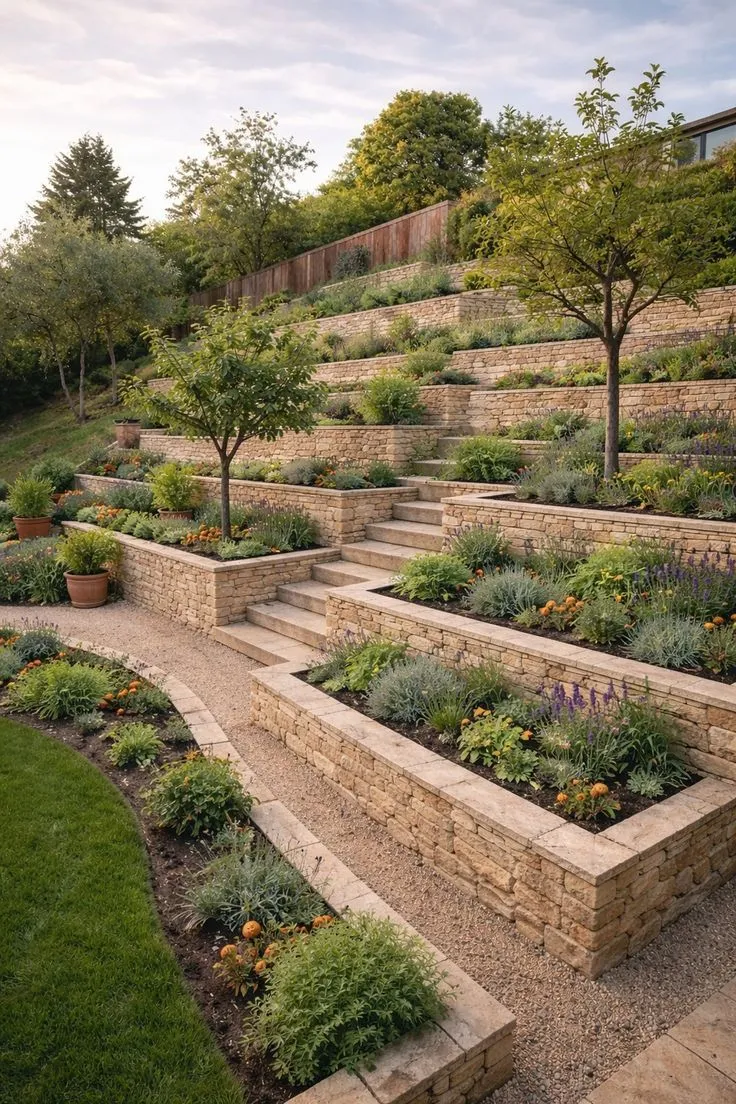
Why Fairfield County Yards Need Walls
Fairfield County is hill country, and a lot of its yards are more slope than lawn. A retaining wall turns that slope into flat, usable ground — a terrace you can plant, a level edge for a patio or driveway, a bed that stays where you put it — and it stops the erosion that slowly moves a hillside downhill every time it rains. Just as often, the job isn’t a new wall at all: it’s an old one giving up. Leaning, bulging, and bowed walls are everywhere in the county, and so are rotted timber and railroad-tie walls from decades past that have reached the end of their life. Replacing those is one of the most common wall jobs we do.
Wall Types We Build
Segmental concrete block is the workhorse: engineered interlocking units made for retaining soil, consistent course to course, and the most common choice for terraces and garden walls. Natural stone costs more and looks like it has always been there — the right call for older homes and front-yard walls the whole street sees. Poured and precast concrete handles the heavy structural work where strength matters more than looks, plain or faced with stone. And timber? It’s the budget option, and we’ll quote it honestly if that’s what you want — but it typically lasts about 20 years before rot sets in. Most homeowners who’ve already replaced one timber wall ask us to rebuild in block or stone and be done with it.
What’s Included
- Free site assessment — slope, soil, drainage, and machine access
- Excavation and a level footing trench
- Compacted gravel base under every wall
- Drainage pipe and gravel backfill behind the wall — the detail that decides whether a wall lasts
- Geogrid reinforcement on taller walls
- Cap stones to finish the top and shed water
- Backfill, grading, and surface restoration when we’re done
Taller Walls: Permits & Engineering
Short garden walls are straightforward. Taller ones carry real structural loads, and they come with rules: many Connecticut towns require a building permit for retaining walls, and walls over about 4 feet typically need an engineered design. The exact requirements vary by town, so check with your town’s building department — or bring it up at your free site visit and we’ll handle the permit process with you, including flagging early when a wall needs an engineer’s design.
Typical Retaining Wall Prices
$3,193–$9,213 for most projects · $40–$360 per linear foot
Published national ranges from Angi’s 2026 cost data (2,556 verified projects). Per square foot of wall face, segmental concrete block runs $30–$50, natural stone $20–$100, and timber $15–$30. Height drives the price faster than length: every added foot needs a deeper footing, more excavation, more drainage, and geogrid in the backfill — which is why a 2-foot wall runs $40–$200 per linear foot while a 6-foot wall can reach $360 or more. Your exact price is quoted free, in writing, after a site visit.
Retaining Walls — Areas Served
Retaining Wall FAQ
Why is my retaining wall leaning or bulging?
How much does a retaining wall cost?
Do I need a permit for a retaining wall in Connecticut?
Can you replace my old timber or railroad-tie wall?
What happens at a retaining wall site visit?
Get Your Free Wall Assessment
Free site visit, an honest read on repair vs. rebuild, and a written quote — no obligation.